
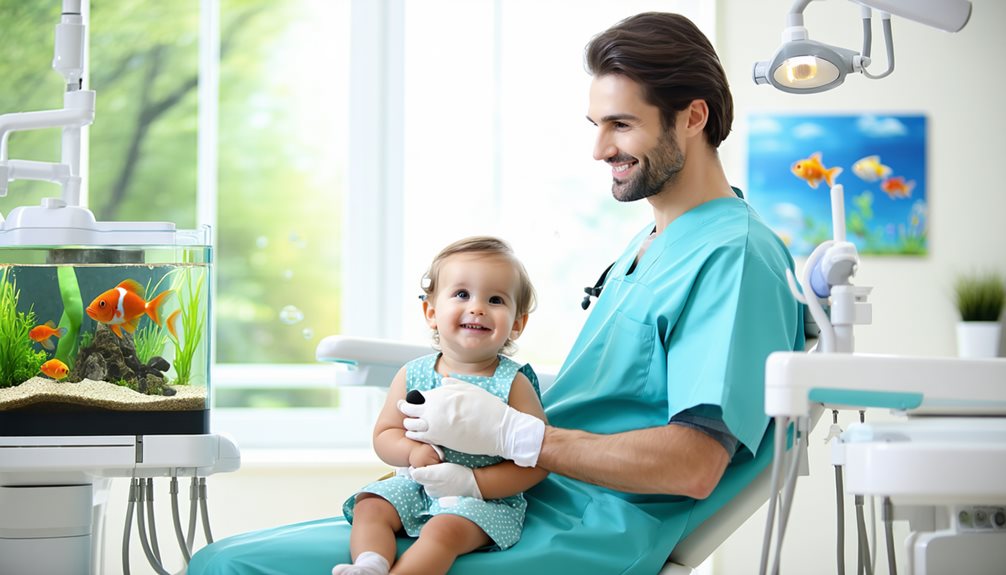
For anxious families, gentle dental practices prioritize calming environments with soothing music and natural elements like indoor plants. A compassionate dental team employs empathetic communication and open dialogue to ease concerns. They offer sedation options, from nitrous oxide to general anesthesia, tailored to individual anxiety levels. Child-friendly techniques, including playful distractions and positive reinforcement, guarantee a comforting experience for young patients. Personalized care plans involve thorough assessments and flexible scheduling to align with patient needs. These thoughtful practices transform dental visits into less stressful events. Explore these strategies further to find the perfect fit for your family’s comfort.
Calming Office Environment
Amidst the various elements that contribute to a positive dental experience, a calming office environment stands as a cornerstone in alleviating anxiety for families. The ambiance of a dental office can profoundly impact the emotional well-being of patients, turning apprehension into comfort.
Integrating soothing music within the practice creates a serene auditory backdrop, enveloping patients in tranquility the moment they enter. Carefully curated playlists, featuring soft instrumental tunes or nature sounds, can subconsciously ease tension and promote relaxation.
The visual appeal of a dental office is no less important. Relaxing decor, characterized by soft color palettes and minimalist design, helps in creating an inviting atmosphere. Thoughtfully placed artwork, such as serene landscapes or abstract pieces, can distract and engage the mind, redirecting focus away from dental procedures.
Incorporating elements of nature, such as indoor plants or aquariums, can further enhance this calming effect, bringing an organic touch to the otherwise clinical setting.
For families seeking innovative dental care, a thoughtfully designed office environment demonstrates a commitment to patient comfort and care. It is an essential step in transforming a routine visit into a reassuring and positive experience, fostering trust and reducing anxiety.
Compassionate Dental Team
A compassionate dental team forms the backbone of an anxiety-free experience for families attending dental appointments. Their role transcends clinical expertise by embracing empathetic communication and creating a supportive atmosphere that caters to the unique needs of each patient.
This innovative approach begins with actively listening to concerns, acknowledging fears without judgment, and offering reassurances that help demystify dental procedures. By fostering open dialogue, dental professionals can tailor their services to alleviate anxiety and build trust.
A supportive atmosphere is cultivated through a team that is trained not only in the latest dental technologies but also in the art of compassion. Dentists, hygienists, and administrative staff work synergistically to guarantee that every interaction is marked by kindness and patience.
This cohesive approach helps to dissipate tension and encourages families to engage with their dental care proactively.
Furthermore, a compassionate dental team utilizes innovative tools and techniques, such as visual aids and simplified explanations, to enhance understanding and comfort.
Sedation Dentistry Options
When it comes to addressing dental anxiety, sedation dentistry offers a range of options that can greatly enhance comfort and ease during procedures.
Understanding these options is crucial for families seeking innovative solutions to dental stress. Two commonly utilized methods include nitrous oxide and oral sedation, each with unique benefits tailored to individual needs.
-
Nitrous Oxide: Often referred to as "laughing gas," this mild sedative is inhaled through a small mask. It provides a calming effect without the lingering drowsiness, making it ideal for patients who wish to resume normal activities post-treatment.
-
Oral Sedation: Administered in pill form, oral sedation ranges from minimal to moderate, depending on the dosage.
It’s particularly effective for those who experience significant anxiety, offering a deeper sense of relaxation during dental visits. -
Intravenous (IV) Sedation: This method allows for rapid sedation through direct bloodstream administration, providing precise control over the sedation level, ideal for more complex procedures.
-
General Anesthesia: Reserved for extensive treatments, it guarantees complete unconsciousness and is typically administered in a hospital setting.
Child-Friendly Techniques
Creating a welcoming environment is vital for easing children’s dental anxiety and establishing positive lifelong oral health habits. Child-friendly techniques serve as a cornerstone in transforming potentially stressful dental visits into engaging and supportive experiences.
One innovative approach is the use of playful distractions. By integrating interactive elements such as colorful visuals, child-friendly music, and hands-on activities, dental practitioners can divert attention from anxiety-inducing procedures. These playful distractions not only reduce fear but also foster a sense of curiosity and comfort in the dental setting.
In tandem with distractions, employing positive reinforcement is essential in nurturing children’s confidence and cooperation. Praising children for their bravery and cooperation during dental appointments reinforces positive behavior and sets a foundation for future visits. Rewards such as stickers, small toys, or verbal acknowledgments serve as tangible affirmations that can transform a child’s perception of dental care from intimidating to delightful.
Moreover, the design of the dental office itself can contribute greatly to anxiety reduction. Bright, cheerful environments with child-centric decor and comfortable seating can make young patients feel at ease.
Ultimately, these child-friendly techniques collectively create a nurturing atmosphere that encourages regular dental visits and instills a proactive approach to oral health from an early age.
Personalized Care Plans
Personalized care plans are essential in addressing the unique dental needs and concerns of each patient, particularly those who experience anxiety. By tailoring dental visits to accommodate individual preferences, practitioners can greatly alleviate stress and foster a more comfortable environment.
Emphasizing individualized treatment, these plans focus on understanding patient histories, preferences, and anxieties to deliver effective and compassionate care. Here are key elements involved in crafting personalized care plans:
-
Comprehensive Assessment: Conducting thorough evaluations of dental history, including past experiences and existing anxieties, guarantees that all aspects of the patient’s needs are considered.
-
Patient Involvement: Encouraging active participation from patients in their treatment planning helps address specific concerns and preferences, fostering a sense of autonomy and trust.
-
Customized Communication: Developing communication strategies tailored to the comfort levels of patients can include visual aids, simplified explanations, or even virtual consultations for preliminary discussions.
-
Flexible Scheduling: Offering appointment times that align with patient preferences, such as quieter hours or extended sessions, can greatly reduce anxiety and enhance the overall dental experience.
Frequently Asked Questions
How Can Dental Procedures Be Made More Affordable for Anxious Families?
Addressing affordability in dental procedures involves exploring flexible payment plans and extensive insurance options. Tailored financial solutions can alleviate anxiety by ensuring access to necessary care while accommodating unique family budgets, promoting long-term oral health and innovation.
What Are the Best Ways to Prepare Children for Their First Dental Visit?
To prepare children for their first dental visit, employ role playing to familiarize them with procedures, and use positive reinforcement to encourage comfort and cooperation, fostering a reassuring experience that reduces anxiety and promotes lifelong oral health.
Are There Any Dietary Recommendations to Promote Dental Health in Anxious Patients?
In addressing dental health for anxious patients, incorporating nutrient-rich foods like leafy greens, nuts, and dairy can enhance oral health. Calming beverages such as herbal teas may help alleviate anxiety, promoting a more relaxed dental experience.
How Often Should Anxious Individuals Schedule Dental Check-Ups?
For ideal oral health and effective anxiety management, individuals experiencing dental anxiety should schedule check-ups every three to six months. This frequency allows for preventative care and gradual acclimatization to the dental environment, fostering a positive experience.
What Are Some At-Home Oral Care Tips for Anxious Families?
Anxious families can enhance oral care at home by practicing gentle brushing and integrating calming techniques, such as deep breathing or soothing music, during their routine. These innovative strategies promote relaxation and improve dental health outcomes.
Conclusion
To sum up, the integration of a calming office environment, a compassionate dental team, sedation dentistry options, child-friendly techniques, and personalized care plans greatly enhances the dental experience for anxious families. These elements collectively contribute to reducing anxiety and fostering a more relaxed atmosphere, ultimately promoting better oral health outcomes. By prioritizing empathy and attention to individual needs, dental practices can effectively address the concerns of both children and adults, ensuring a positive and supportive experience for all patients.

